The World At Play
Baseball, Identity, and the World Baseball Classic


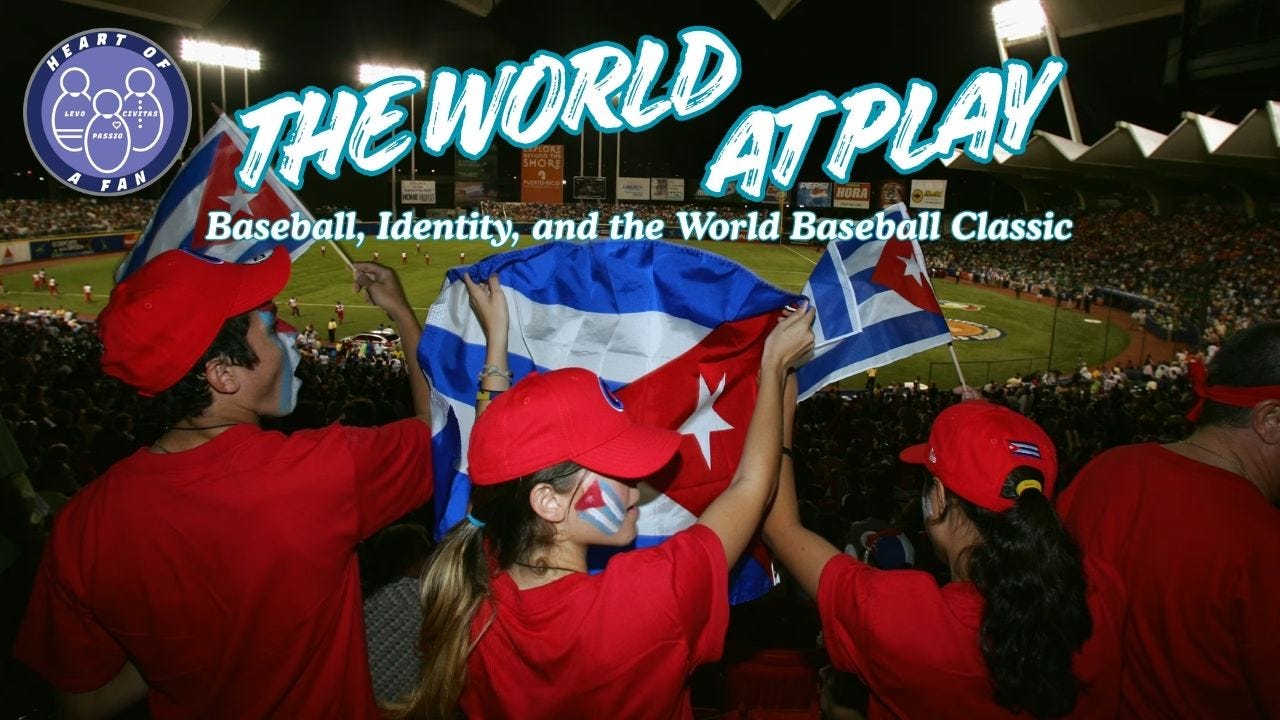
The emotion of “joy” has been thrown around a lot the last couple weeks, the fullness of it all and the lack thereof. Simultaneous praise and critiques of player celebrations, dugout celebrations, even fans reactions have been put under the microscope of geopolitics and culture.
The United States, the proverbial birthplace of baseball, has been noticeably cold in their play. In a sport that has been critiqued for being sterile and antiquated, the U.S. has enforced that belief. Fans start to believe that this is just the standard experience that should come with the game. You want some whimsy with your baseball? Go watch the Savanah Bananas.
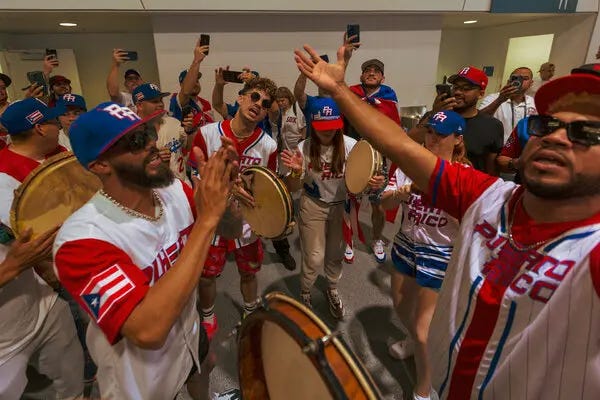
On the other side of the aisle, however, is a different expression of what the game and sports in America could be. Full bands in stands, synchronized dances, grandiose celebrations on the field. The languages may differ but the thread remains the same: genuine joy. Joy for the ability to play the game and joy for the ability to witness it.
Now, I don’t think anyone expects an atmosphere like we’ve seen these last couple weeks for a game in May. Nor would they expect the traveling bands and synchronized chants that would make Michael “Nuf Said” McGreevy blush. However, there is one thing that can be replicated and fostered from this tournament: communal fun.
Sports fans have become incredibly aware of their role in their relationship with their team. They have to foot the bill for multiple areas to showcase their fandom, and the teams take the money to hopefully build a product worth of that investment. Sadly, that hasn’t been the case for multiple fanbases. Yet, as the fans of Japan, the Dominican Republic and countless others have shown, is that the biggest investment fans can make is in themselves and their joy.
The fans weren’t as tied up in the results of their team, as they were more focused on reveling in the experience with their fellow fans. How many examples have we seen of fans from different nations taking part in impromptu chants and last second dance parties these last weeks? Simply by just making the environment available, and letting the fans make their fun, has led to an atmosphere that has been hard to replicate.
That should be the key lesson that fans and teams can learn from this WBC. Fun doesn’t need to be forced, it just needs to be natural. By letting the fans play a role in that fun, you’ll get something that’s going to truly reflect your community and culture, similar to what we’ve seen in the last weeks.
When you think about baseball in your home country or culture, what does the game represent beyond just a sport? Is there a moment — personal or historical — that captures that for you?
DQ: In Canada, baseball represents connection. It connects generations, communities and cultures across a country that is geographically vast and incredibly diverse. This is a hockey country, but baseball has deep roots here. One of the earliest recorded games of baseball was played in Ontario in the 1800s, long before the sport became a global industry.
I actually wrote a book called Canadian Baseball Stories From Coast to Coast, which explores many of those historical moments and the people who helped shape the game across our country. What stood out to me while writing it was how baseball quietly existed in every region of Canada long before many people realized it.
For me personally, the moment that changed everything was watching the Toronto Blue Jays win the World Series in 1992 and 1993. Like millions of Canadians, I was glued to the television. Those championships inspired me to start playing baseball myself.
What makes that story a little unique is that my parents are from Italy and were not very familiar with baseball when I was growing up. Baseball wasn’t something that was deeply rooted in our household culture at the time. But like many immigrant families in Canada, sport becomes a bridge into the community. Watching those Blue Jays teams helped introduce our family to the game and sparked my own interest in playing.
I didn’t begin playing until I was 12 years old, but the game quickly became a major part of my life. By the time I was 18, baseball had taken me much further than I ever imagined. I was fortunate enough to earn a scholarship to Texarkana College and later Northwestern State University in Louisiana. The sport also allowed me to represent Canada internationally when I played in the 2003 World Baseball Challenge, where I had the opportunity to face players from several of the countries that now compete in the World Baseball Classic.
Experiences like that remind me that baseball in Canada has always been bigger than just the professional leagues we see on television. It’s a sport that quietly connects communities, creates opportunities, and allows athletes from very different backgrounds to find a shared identity through the game.
Big League Banchan: As a Korean-American born and raised in the U.S., I wasn’t always proud of my Korean heritage growing up. It was the subject of teasing at school and a constant reminder of how I was different from others. Korean culture (food, media, etc.) also wasn’t the juggernaut it is today back during the 90s, which made me feel more isolated.
When I became a dad, I realized I didn’t want my kids to have the same experience I did. I want them to be proud of being Korean. So I started collecting baseball cards of Korean players last year, which happened to coincide with my 5-year-old’s increasing interest in sports. Looking through my cards together eventually led to him wanting to watch more baseball with me. Pretty soon, he had his favorite MLB team (the Cubs since we live in the Chicago area and I am a lifelong Cubs fan), his favorite player (Jung Hoo Lee), and his favorite World Baseball Classic team (Korea of course).
So not only do I enjoy baseball as a sport, but it also represents key memories I make with my son while also a way to encourage my kids to be proud of their Korean heritage.
RA: In the U.S., baseball — especially through Major League Baseball — has long symbolized continuity and identity. It’s often called America’s pastime because it mirrors the country’s history: immigration, social change, community, and resilience. Ballparks have traditionally been gathering places where generations sit together — grandparents, parents, and kids — sharing stories while the game unfolds slowly in the background.
Baseball’s rhythm allows space for conversation, memory, and tradition. The crack of the bat, the smell of popcorn, the seventh-inning stretch — all of it forms a kind of cultural ritual.
One moment that captures baseball’s deeper meaning is when Jackie Robinson debuted with the Brooklyn Dodgers in 1947. That moment wasn’t just about sports — it represented a major step toward racial integration in American society. Robinson’s courage and performance under enormous pressure showed how the game could reflect — and even influence — social progress.
For many people, that moment symbolizes baseball’s ability to be a stage where history changes.
CV: For me, baseball represents heritage and connection.
As an Italian American, working with the Italian American Baseball Foundation and the Italian national team allows me to connect with the land of my family’s roots through America’s pastime. Every time I step onto a field in Italy or work alongside Team Italy, it feels meaningful in a way that goes beyond the game itself.
There is also a powerful historical layer to it. Baseball was introduced to Italy by American servicemen during World War II. That moment created a cultural bridge that still exists today.
What makes that history even more personal for me is that one of the pioneers who helped organize the sport in Italy after the war, Horace McGarity, was from Long Island, where I grew up and still live today. This year he will be inducted into the Suffolk County Sports Hall of Fame, where I serve as president.
Today, we continue building that connection through our partnership with Francisco Cervelli and the development of a baseball academy in Tuscany. Through camps, clinics, and showcases, we’re helping create opportunities for Italian kids who dream of playing the game at a high level. We also provide scholarships through the Italian American Baseball Foundation for college baseball and softball players of Italian descent.
For me, it all comes down to four things: impact, heritage, culture, and connection. Bellissimo.
ThomasLoveSeagull: Baseball has long been called America’s national pastime, even though it hasn’t actually been the country’s favorite sport since the 1960s, long before I was born. But the history still matters, and that is part of why I love it. A lot of American history runs through baseball whether people realize it or not, most notably Jackie Robinson integrating the major leagues.
For me, I grew up a Yankees fan, which was probably more geography than anything else. But I often would walk down the street to my grandparents’ house and watch baseball with my grandpa. One of my earliest clear memories is watching Charlie Hayes catch the final out of the 1996 World Series. I was convinced it was the greatest thing I’d ever seen. Little did I know that the 1998 Yankees were about to win a million games. I remember them starting the season 0-3 on the West Coast and telling my friends maybe they wouldn’t be very good that year. I could not have been more wrong.
Those might not seem big on a historic scale, but I think that’s what baseball does best: attach itself to people’s lives. The history of the sport blurs together with your own life story.
RD: There are a few of those. Personally, living in Cuba most of my life, and seeing Cuba own the international landscape, it was interesting to look at it for the first time in 2006 with MLB competition involved. The reality is that Cuba was a major upset because they eliminated MLB teams like Puerto Rico, Venezuela and the Dominican Republic during their big run, but we have to admit they got lucky because others underestimated them. I remember watching every game with my childhood friends, and spending time drinking wine and discussing every play in one of their houses.
Historically, I believe that 2023 and 2009 were the best finals because of how the tension wrapped up. In 2009, we had Ichiro hit a two-run single in extra innings against Chang-yong Lim, and in 2023 we had Shohei Ohtani striking out Mike Trout to end a very close game.
The Rising: It’s interesting because I’m Mexican-American. Proud of being both and baseball has been in my family for generations, so baseball represents that togetherness and familiarity. I remember the very first baseball game I ever took my son (2 months old at the time) to was a matchup between USA and Dominican Republic, with USA winning behind a spectacular robbery of a Manny Machado homerun by Adam Jones and huge homer by Giancarlo Stanton.
The World Baseball Classic brings together nations that don’t always share much politically or culturally. Have you ever experienced a moment — watching or covering the WBC — where the game felt like it was doing something diplomacy couldn’t?
RD: I am split in that aspect. When it comes to Cuba, no matter where they play in this tournament, there is going to be politics involved. In 2006, there were anti-Castro signs in the stands in Puerto Rico, in 2023, a Cuban guy stormed the field during the Cuba-USA game. The reality is that we have learned that baseball players respect each other, and that there is a lot of respect for Cuban players who still live on the island because most MLB players are aware of the struggles they face on a daily basis.
To me it seems like a paradox to witness Venezuelan MLB players suit up and not see that in Cuba. Yet, Venezuela and Cuba shared the same type of regime for every single WBC except for this one.
My favorite story regarding politics in the WBC happened in 2006. Eduardo Perez, playing for team Puerto Rico, was having a constant verbal fight with then-star reliever Pedro Luis Lazo of Cuba (who, by the way, did not get his visa approved for this issue even when he played in 2006 and 2009). After the game in which Cuba eliminated Puerto Rico, a Cuban journalist decided to interview Eduardo Perez about the friendly strife. What they didn’t know was that Eduardo is the son of Atanasio Perez Rigal (aka Tany or Tony Perez), a Cuban player who is in the National Baseball Hall of Fame in Cooperstown, and who, of course, is not mentioned in Cuban stream media. When Eduardo Perez said something like he was okay with the loss because he still had family in Cuba and even mentioned the location, I started laughing.
Another rivalry I would tell you about is Japan and Korea. There has been a lot of beef between these two, and having them square up against each other is interesting, no matter how well or badly they do in the tournament in the long run.
ThomasLoveSeagull: Here in Japan, people are definitely more interested in Czechia than they were before the WBC came along. It started in 2023 when Ondřej Satoria, an electrician by trade, struck out Ohtani, and instantly became a star.
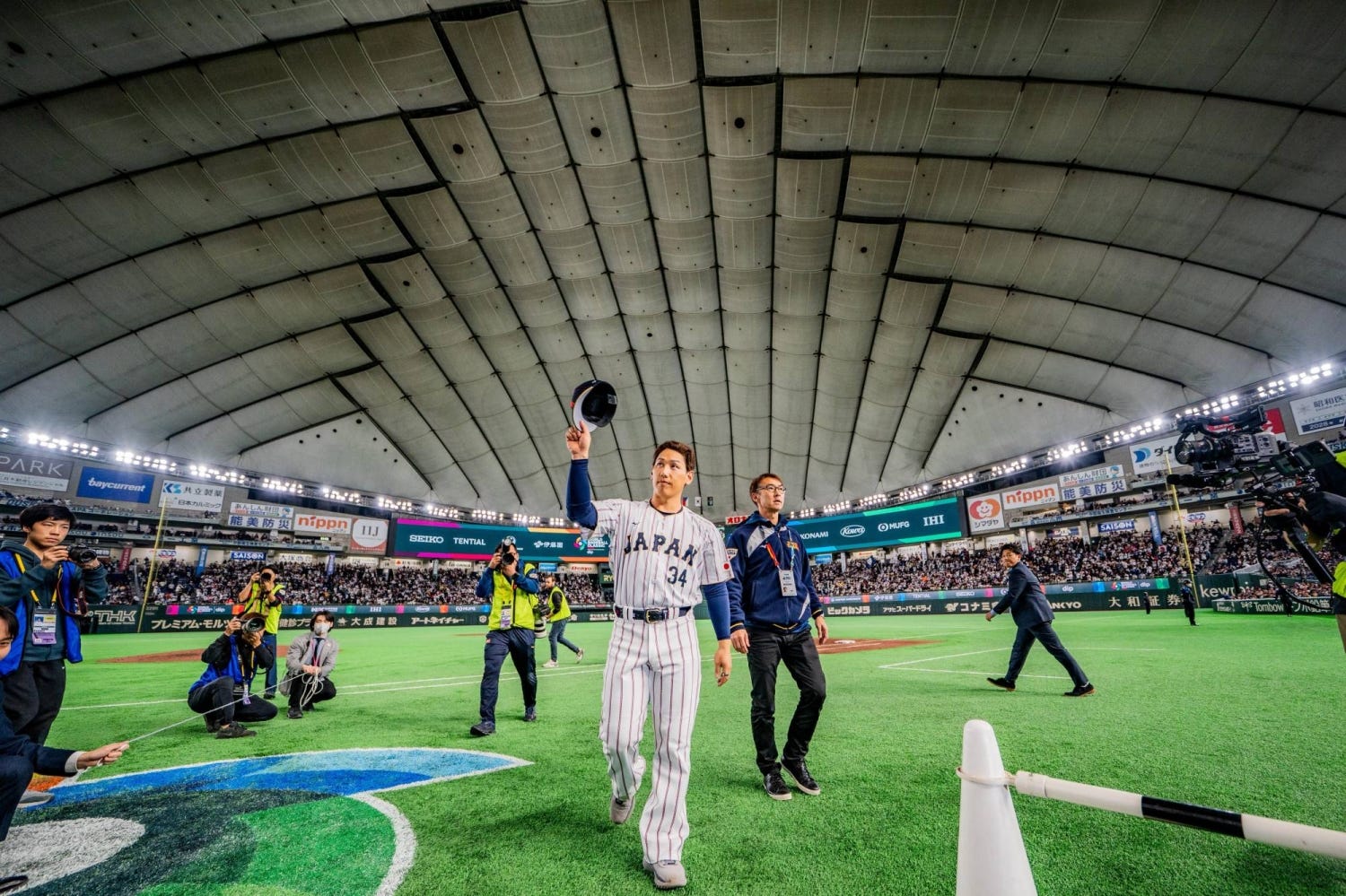
This year, he pitched his final game against Samurai Japan at the Tokyo Dome and received a standing ovation from more than 40,000 fans. Even the Japanese players and coaches applauded him. That moment captured something special about the tournament. It wasn’t just about who won or lost. It was about baseball cultures recognizing each other. An electrician from Ostrava sharing the field with the best players in Japan, and being celebrated for it.
It’s paid off, too. In 2025, Marek Chlup became the first European position player to appear in NPB (Nippon Professional Baseball). There’s also a partnership between Czech baseball and the Chiba Lotte Marines. I doubt either of those things would happen without the WBC.
CV: All the time.
Sports diplomacy is incredibly powerful because it removes the barriers that politics often creates. Baseball becomes a shared language. When people step onto the field or into a stadium, they connect through a common passion.
Through international baseball, I’ve been fortunate to travel, meet people from different cultures, and tell stories that bring communities together. Covering the World Baseball Classic really highlights that.
You see players representing their family heritage and their national pride. You see fans from different countries celebrating together. Those moments remind you that sport can unite people in ways very few things can.
DQ: Absolutely. The World Baseball Classic has a way of dissolving barriers that politics often reinforce. When players put on their national jerseys, the game becomes something deeper than competition.
One of the most powerful things about the tournament is seeing players who spend most of the year competing against each other suddenly become teammates because of national pride or family heritage. You see athletes representing countries through parents, grandparents, or cultural roots. That creates a powerful sense of global connection.
As a coach, I’ve had the privilege of working with athletes who have gone on to represent Canada on the international stage. Two players I coached, Tyler Black and Owen Caissie, are members of Canada’s World Baseball Classic roster. Watching players you once worked with as young athletes grow into professionals representing their country is an incredibly proud moment for any coach.
I’ve also worked with athletes who have represented other nations internationally, including players who have competed for Brazil. Experiences like that reinforce how global the game has become. Baseball connects people from completely different cultures who may speak different languages but share the same love for the sport.
What makes the World Baseball Classic special is that every country brings its own culture to the field. In many Latin American countries, the game is played with incredible energy, music, dancing in the dugout and passionate celebrations. In countries like Italy, baseball blends with everyday traditions and culture; you might see players enjoying an espresso together during the game. Japan brings a level of discipline, precision and organized fan support that turns the stadium into a coordinated spectacle.
Those differences don’t divide the game, they make it richer. Each culture adds its own rhythm, personality and passion to baseball. When all of those styles come together in the same tournament, you realize the game has become a global language. In moments like that, baseball becomes more than a sport. It becomes a cultural conversation that often accomplishes something diplomacy struggles to achieve — genuine connection.
RA: One of the clearest examples came during the early Classics when Japan and South Korea faced each other multiple times in the 2006 and 2009 tournaments. The countries have deep historical and political tensions, yet during the tournament the rivalry lived almost entirely inside the game.
Players like Ichiro Suzuki spoke openly about the intensity of the matchup, but after games you’d see players from both teams talking, exchanging jerseys, and acknowledging each other’s talent. The field became a space where competition was fierce but mutual respect was visible — something politics often struggles to display.
BigLeagueBanchan: The beauty of sports is that it unites fans from different backgrounds and cultures over a shared game. To me, that’s where the World Baseball Classic shines. It’s a time when people are proud to represent their cultures and heritage. Of course, you have guys like Jung Hoo Lee and Hyeseong Kim that are playing for their home country. But then there’s also players like Shay Whitcomb and Jahmai Jones, who despite being born in the U.S. are eager to honor the Korean heritage of their mothers, and see the opportunity to play for Team Korea as a great honor.
And despite having immense pride for their respective countries, both players and fans of the WBC are able to acknowledge and celebrate the skills and performance of opposing teams. A recent example is when the Japanese crowd gave Czech pitcher Ondřej Satoria a standing ovation for pitching 4 2/3 scoreless innings. The full-time electrician famously struck out Shohei Ohtani during the 2023 tournament. This is the type of sportsmanship that makes events like the WBC so beautiful. This is where players, fans, and countries put aside any conflicts or past history and just bond over the game of baseball.
The Rising: I went to a game between Korea and Mexico in 2009, and I was seated in a section full of Korean supporters. By the end of the game we were chanting with them against Mexico. It didn’t matter who we rooted for. We all love the game and we were all willing to enjoy it and embrace each other’s cultures.
Baseball has long struggled with the perception that it’s too slow, too regional, too old. Does that criticism land differently when you’re watching a WBC game versus a regular MLB season game? Why or why not?
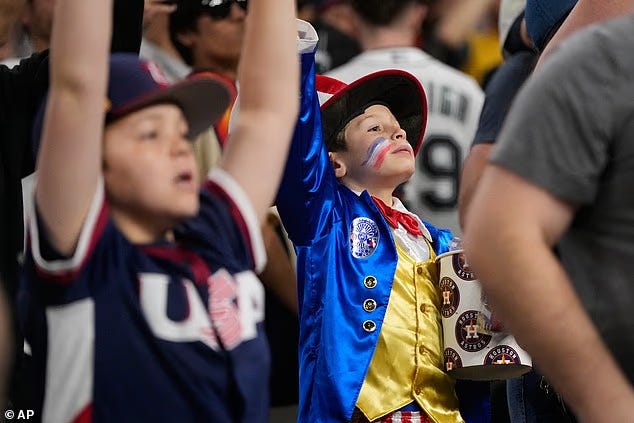
RD: Let’s be honest about something. And I have been seeing this with a lot of Americans posting videos and saying that this is more fun than the MLB season. Diversity will always be key to success. But also, MLB season is a job. It is true that you need to love baseball to be good at it and play it for a living, but MLB has lost the sense of joy while playing the game. And now you have guys who maybe grew up in the same neighborhood, probably have the same friends, or are even married to one of their sisters, and you create a family environment. That’s why you see Dominicans, Puerto Ricans, Mexicans and Venezuelans having so much fun.
Also, there is a big difference between playing for money and playing for your country. It’s like a battle — when you fight for money, you are nothing short of a mercenary, and when you fight for your homeland, you are a patriot. I support professional sports, but we constantly see players leave one team for either money or because it is a losing team. In the WBC, unless you are like Vladimir Guerrero Jr. (who could play for Canada but plays for the DR), Manny Machado (who could play for the USA but plays for the DR), Joseph Contreras (who could play for the USA, Cuba or Brazil, but plays for the latter), Nolan Arenado (who could play for Cuba, the USA, or Puerto Rico and played for USA in 2017 and is playing for Puerto Rico now), and many others with multiple nationalities and origins — it is your homeland what you choose.
CV: The World Baseball Classic is the most exciting baseball tournament on the planet. Any level. Any country.
People who think baseball is slow often miss the beauty of the game’s rhythm. In a world that moves faster every day, sitting down to watch a baseball game can actually feel like a gift.
But the WBC adds another level entirely. You have national pride, MLB stars playing alongside players who developed in those countries, and a tournament format where every game carries real pressure. The atmosphere is electric.
From a global perspective, the World Baseball Classic is also the most powerful marketing tool Major League Baseball has for growing the sport internationally.
BigLeagueBanchan: The World Baseball Classic is the most exciting baseball tournament on the planet. Any level. Any country.
People who think baseball is slow often miss the beauty of the game’s rhythm. In a world that moves faster every day, sitting down to watch a baseball game can actually feel like a gift.
But the WBC adds another level entirely. You have national pride, MLB stars playing alongside players who developed in those countries, and a tournament format where every game carries real pressure. The atmosphere is electric.
From a global perspective, the World Baseball Classic is also the most powerful marketing tool Major League Baseball has for growing the sport internationally.
DQ: It definitely lands differently.
World Baseball Classic games feel faster not because the clock moves quicker, but because the emotional stakes are much higher. In many ways, every game in the tournament feels like a playoff game. Every pitch matters because teams are representing their country and the tournament format leaves very little margin for error.
In Major League Baseball, the regular season is 162 games long. Over that many games, the pace can sometimes feel slower, especially when teams fall out of the playoff race late in the season. That doesn’t mean the game itself is slow, it means the urgency isn’t always the same.
Playoff baseball is never too slow and the World Baseball Classic carries that same intensity from the very first pitch. Dugouts are louder, fans are more engaged and every moment feels like it could change the outcome of the tournament.
The WBC shows people something important: baseball isn’t slow, it’s situational. When the stakes rise, the game becomes electric.
ThomasLoveSeagulls: I don’t think you can apply that criticism to the WBC at all. Part of the reason is the atmosphere. The games have a kind of intensity you rarely see in an MLB game. Crowds bring drums, coordinated chants, and the energy feels closer to a soccer match or a festival than the quieter environment many American fans are used to. I’ve lived in Japan for several years now, and games in Japan between two bad teams are more lively than games in America. I was also at the game between Taiwan and Korea and the energy and atmosphere was probably the best I have ever been in. It’s hard not to get swept up in the positive energy.
And instead of spring training, you get elimination games with national pride on the line. Every pitch, every at-bat now matters. There’s no slowness at all. The World Baseball Classic challenges a lot of the assumptions people have about professional baseball, especially the idea that March games aren’t supposed to matter.
RA: Yes, that criticism tends to land very differently when you’re watching a World Baseball Classic game compared to a typical Major League Baseball regular-season game.
An MLB season is 162 games long, so even dramatic moments can feel like part of a marathon. In the Classic, the structure is short and unforgiving — one loss can change a country’s tournament. Because of that, every pitch counts. When Shohei Ohtani started against Italy in the 2023 WBC Quarterfinals at the Tokyo Dome, it was electric and carried the emotional weight of a playoff elimination game. The game itself hasn’t changed pace, but the context speeds up the emotional experience.
In many WBC games, fans bring international tournament energy — chants, drums, flags, perpetual vibrations — and the stadium rarely goes quiet between pitches. That constant atmosphere fills the pauses that critics often point to as ‘slow.’ Instead of silence between pitches, you get singing, chanting, and anticipation. In MLB, players represent cities or franchises. In the World Baseball Classic, more importantly, they represent their families, heritage, and national identity.
The Rising: It definitely hits differently. You can tell the players are playing with the same sort of fun and passion they had from when they were just kids playing a game. Except for USA this year. They’re very business-like.
The spending gap between big-market and small-market teams keeps growing, and a labor stoppage feels increasingly likely. For fans and contributors from countries where baseball carries deep cultural meaning — what’s at stake beyond the business side of it?
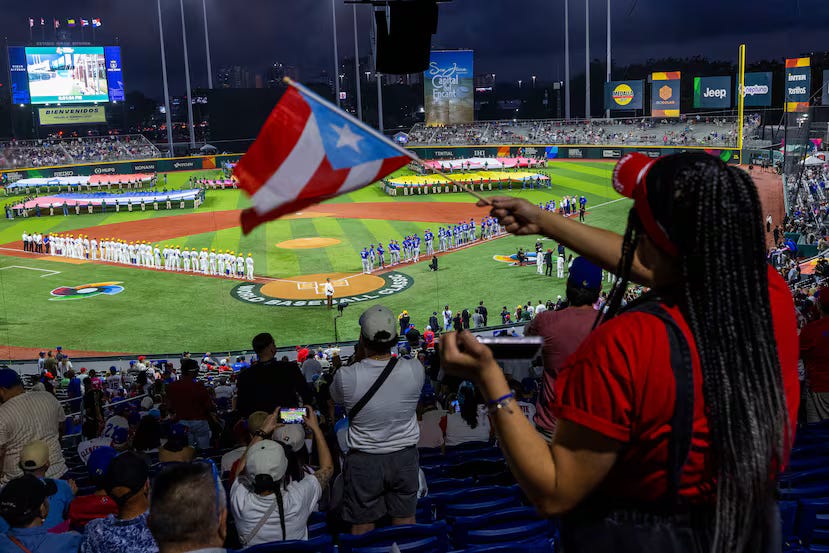
ThomasLoveSeagull: I think trust is what is at stake. It took baseball years to recover after the 1994 strike, and there are still people who never returned to caring about the sport in the same way.
Baseball works best when fans feel like the game belongs to them a little bit. That’s true in the United States, but it’s even more visible in places like Japan, where the sport is woven deeply into everyday life.
Here in Tokyo you see batting cages tucked between buildings, baseball ads on vending machines, and Shohei Ohtani’s face everywhere. High school baseball fills Koshien Stadium in the middle of summer and becomes the talk of the entire country. The sport isn’t just entertainment. It’s part of the culture.
When labor disputes shut the game down, the argument is usually about money, but what fans hear is that the people running the sport have forgotten what the game means to everyday people.
Baseball has survived moments like that before, but every time it happens the sport risks losing a little more of the connection it spent generations building.
CV: Baseball itself will never disappear. The love of the game is too deeply rooted around the world.
What’s really at stake is fan engagement with the professional level of the sport. When the economy is uncertain, fans don’t want to hear about owners and players arguing over money. They just want to see the game played.
Even if Major League Baseball faces challenges, the grassroots passion for the sport will remain. Kids in Italy will still work to make the national team. Players in the Dominican Republic will still chase the dream of being discovered by scouts.
The danger is slowing the global momentum of the sport at the professional level. Events like the World Baseball Classic have helped grow baseball internationally, and maintaining that momentum is critical.
RD: I am going to be blunt and honest about it. MLB needs at least four more expansion teams, and at least two of them have to be outside of US territory. In 1960, when the Havana Sugar Kings won the Triple A World Series, they were close to becoming the first MLB team outside of US territory. The Castro Revolution and the end of professional baseball in the country prevented that from happening. Then, at some point we had two Canadian teams in MLB. The Toronto Blue Jays won it all in 1992 and 1993, and the Montreal Expos were arguably the best team in baseball when the strike broke in 1994.
I have seen great players change teams and wither in oblivion because they were everyday players in one team and the other one just wants them to platoon. The worst part (on the business side) is that they get paid more to play 80 games a season with one team than they did for playing 150 with another. There is definitely an imbalance, but I believe there is no close solution to the matter in the horizon. It is sad to see extremely talented players having to either go and play in the Caribbean Leagues or the Asian leagues just because the market is not right or because some teams don’t like them.
As a SABR member, I also need to recognize how much damage sabermetrics and the analytics department has done to the players and some players’ careers. It is completely unfathomable to have a player win MVP votes, or be a postseason MVP and not resign them. You realize it is not about winning, it is about selling jerseys and memorabilia. Even if it may lead to a work stoppage, there has to be a total salary cap, or we are going to be involved in years of competitive imbalance.
DQ: What’s at stake is trust.
Fans understand that professional sports are businesses, but baseball has always been built on something deeper — tradition, family memories and community identity. When financial disputes dominate the narrative, it risks disconnecting the sport from the people who built its culture.
In countries where baseball is woven into everyday life — places like Japan, the Dominican Republic, Venezuela, Cuba and increasingly Canada — the game is more than entertainment. It represents opportunity, national pride and community.
Many young athletes around the world grow up dreaming about baseball not because of contracts or television deals, but because the sport gave them a path. If labor disputes overshadow the game too often, it sends the wrong message to the next generation.
The business matters, but the heartbeat of baseball has always been the people playing it and the communities supporting it.
BigLeagueBanchan: I think that’s exactly the answer — you lose a big part of culture. Sports foster unity and identity. It allows people to share memories and traditions together. I can go to a bar to watch a game with total strangers, but by the end after you experience the highs and lows of a game together, they all feel like friends. Sports also allow us to celebrate human achievement and teach us values important to culture like perseverance, discipline and courage.
I realize losing a season (or part of it) due to a lockout isn’t going to affect culture in the long run. I don’t want to be overdramatic. But the lack of a baseball season will deprive us of certain special memories and opportunities to bond with others during its absence.
RA: When people talk about a possible labor stoppage in Major League Baseball, the conversation usually centers on revenue splits, payroll gaps, and competitive balance. But for fans in places where baseball carries deep cultural meaning, what’s at stake goes far beyond the business side. In countries like Japan, Dominican Republic, Venezuela, Puerto Rico, and increasingly Italy, MLB isn’t just another professional league — it’s the top stage for players who grew up dreaming about the sport.
When the league stops, that pipeline of inspiration pauses too. Young players in academies or youth leagues lose the daily visibility of stars they identify with. For many kids, seeing someone from their town or country succeed in MLB is proof that their own baseball dreams are possible.
A prolonged stoppage risks slowing that momentum. International fans who are still building a habit of following the sport may drift away if the highest level of the game disappears for months. For players representing countries tied to family heritage — like many on Team Italy — MLB visibility often leads directly to national team participation. MLB favorites Mike Piazza (2023 WBC Team Italy manager) and Francisco Cervelli (current WBC Team Italy manager) have helped raise the profile of Italian baseball precisely because their playing careers created that connection between heritage and the global stage. When the league shuts down, those storytelling bridges weaken.
Perhaps the biggest cultural risk is fan trust. Baseball has endured several labor crises, including the cancellation of the 1994 World Series. That moment damaged the sport’s relationship with fans for years. For international audiences — many of whom are still forming a relationship with the game — a new stoppage could reinforce the idea that baseball is more about business disputes than the sport itself.
The Rising: Fandom rarely changes unless the team actively leaves you (see: Chargers). I’ve suffered through the small market blues with the Padres and we as fans were conditioned to accept having great prospects and washed up veterans. Small markets are like that. But when you have an owner that cares, that wants to compete, that is willing to spend the money they earn and then some (see: Peter Seidler) then the fandom and culture come out in droves. A random Tuesday night against the Marlins is a sold out 43k crowd from beginning to end. Every night is a playoff atmosphere. What’s at stake is not losing what they have, it’s missing out on what they could have.
If you could tell someone who has never cared about baseball why this tournament deserves their attention, what would you say?
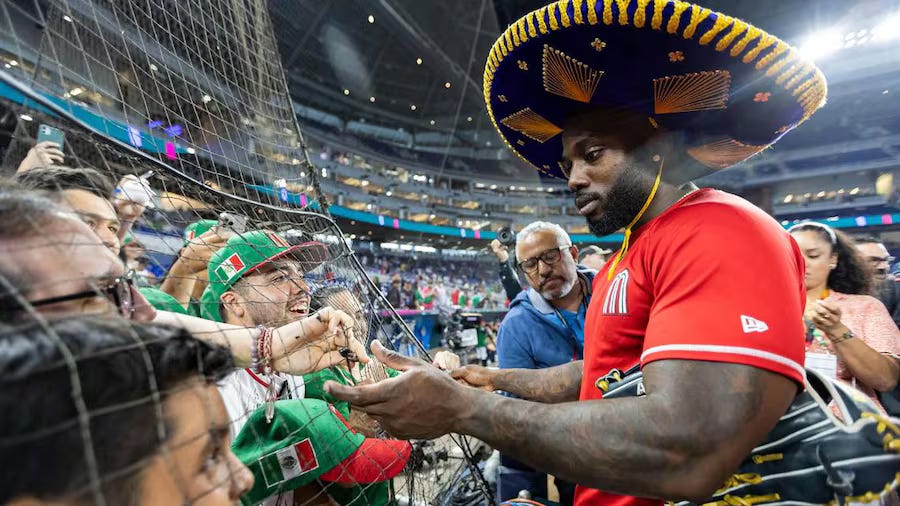
RA: If someone told me they’ve never cared about baseball, I’d say the World Baseball Classic is the one tournament that can change that.
First, it turns baseball into something closer to a global event. Players who normally compete against each other in Major League Baseball suddenly represent their countries. The stakes shift from a long season to national pride, and that instantly makes every pitch feel more meaningful.
Second, the atmosphere is completely different from what people expect baseball to look like. In stadiums in places like Tokyo, Miami, or San Juan, the crowd energy is nonstop — fans waving flags, chanting, and celebrating every big moment. It feels less like a quiet baseball game and more like an international championship.
Third, the tournament creates moments you simply can’t script. One of the most famous came when Shohei Ohtani struck out Mike Trout to win the 2023 WBC for Japan over the United States. Two of the best players in the world — MLB teammates at the time for the Los Angeles Angels — suddenly facing each other for their countries with the entire tournament on the line.
But maybe the biggest reason the Classic deserves attention is that it shows how global baseball has become. Teams from places like Italy, Mexico, South Korea, and Venezuela bring their own style, traditions, and fans into the same competition. Even if you’ve never cared about baseball before, the World Baseball Classic is a chance to see the sport at its most emotional, international, and unpredictable. And once you see a stadium full of fans celebrating a big moment for their country, it’s hard not to get pulled in.
The Rising: This tournament is what is everything that is right with the world. The diversity, the fun, the joy of playing a kids game is all out there. Horns, drums, bongos, cowbells, at all times. Even the World Series couldn’t compete with this level of excitement for a casual fan.
DQ: I would tell them the World Baseball Classic is baseball at its most human.
It’s where you see superstar professionals playing with the same passion they had as kids. It’s where national pride meets personal storylines — players representing the countries their parents and grandparents came from. It’s where fans from around the world celebrate the same game in completely different ways.
You might not care about the standings or statistics, but when you watch a player put on their country’s jersey and step onto that field, you see what sport is supposed to be about.
The World Baseball Classic reminds us that baseball doesn’t belong to one country. It belongs to the world.
BigLeagueBanchan: Not only do you have the intrigue of an international tournament, but because of the way the tiebreakers are set up in the pool play stage, the scenarios to advance can get very complex and exciting. And then once you get to the quarterfinals, it is single elimination until the end, making every game that much more compelling. Look, I love the MLB postseason. But when you have the possibility of getting eliminated in each game, you can’t beat how thrilling that is. That’s why everyone should watch the World Baseball Classic!
ThomasLoveSeagull: Because the World Baseball Classic shows baseball the way the entire world experiences it.
You have superstars like Shohei Ohtani and Mike Trout facing off in legendary moments, but you also have players like Satoria, an electrician from Czechia whose fastball barely reaches 80 miles per hour. That’s the kind of moment the tournament creates. The best players in the world share the field with players who still have day jobs, and for a few weeks the entire baseball world exists in the same place. Even underdogs, like Team Italy, can shock the world and topple powerhouse teams.
If you want to understand why the sport still matters to so many people, the WBC is probably the fastest way to see it.
CV: Because anything can happen.
You get dramatic upsets, incredible pitching performances, clutch hits, and unforgettable moments. And all of it happens in March, when baseball fans are just beginning to feel the excitement of the season.
But the real magic of the WBC is what it represents. It connects countries through sport. It gives young players around the world a dream of representing their nation. And it gives professional players who spend their careers representing a franchise the chance to represent something even bigger.
Once you experience the energy of the World Baseball Classic, you start counting the days until the next one.
RD: I think I have spoken about that in all of my previous answers. This is the TRUE World Series. You have the best of the world (unless they don’t have insurance, aren’t allowed to play by their MLB teams, or aren’t called by their nations due to personal or political reasons). Just imagine if those restrictions didn’t apply, if pitch counts were not a thing, and that everyone who could play did. We would have a tournament ten times better than the World Series. Honestly, this is already better and more fun.
Thank you to all of our guests for contributing their perspectives to this piece.
If you haven’t already, follow us on social media @HeartOfAFanPod, rate our previous episodes on the streaming service of your choice, and sign up to get these stories in your inbox every Tuesday. All of this can be found at our website, heartofafan.org
It’s also where you can reach out to us if you have a story about how you’ve built a community through sports fandom or wish to record your own unique story.
Until next time, I’m Matthew Barry, and I’ll see you next time to see what else we can find in the Heart of a Fan. Thanks for reading.
 | A guest post by
|
 | A guest post by
|
Ronald Acuna Jr of Venezuela is missing before tonight’s final WBC game against USA. Rumors are swelling that US Delta Force parachuted into the Venezuelan practice facility and relocated the superstar outfielder. Pentagon officials stated that “all options are open” when facing a .330 slugger